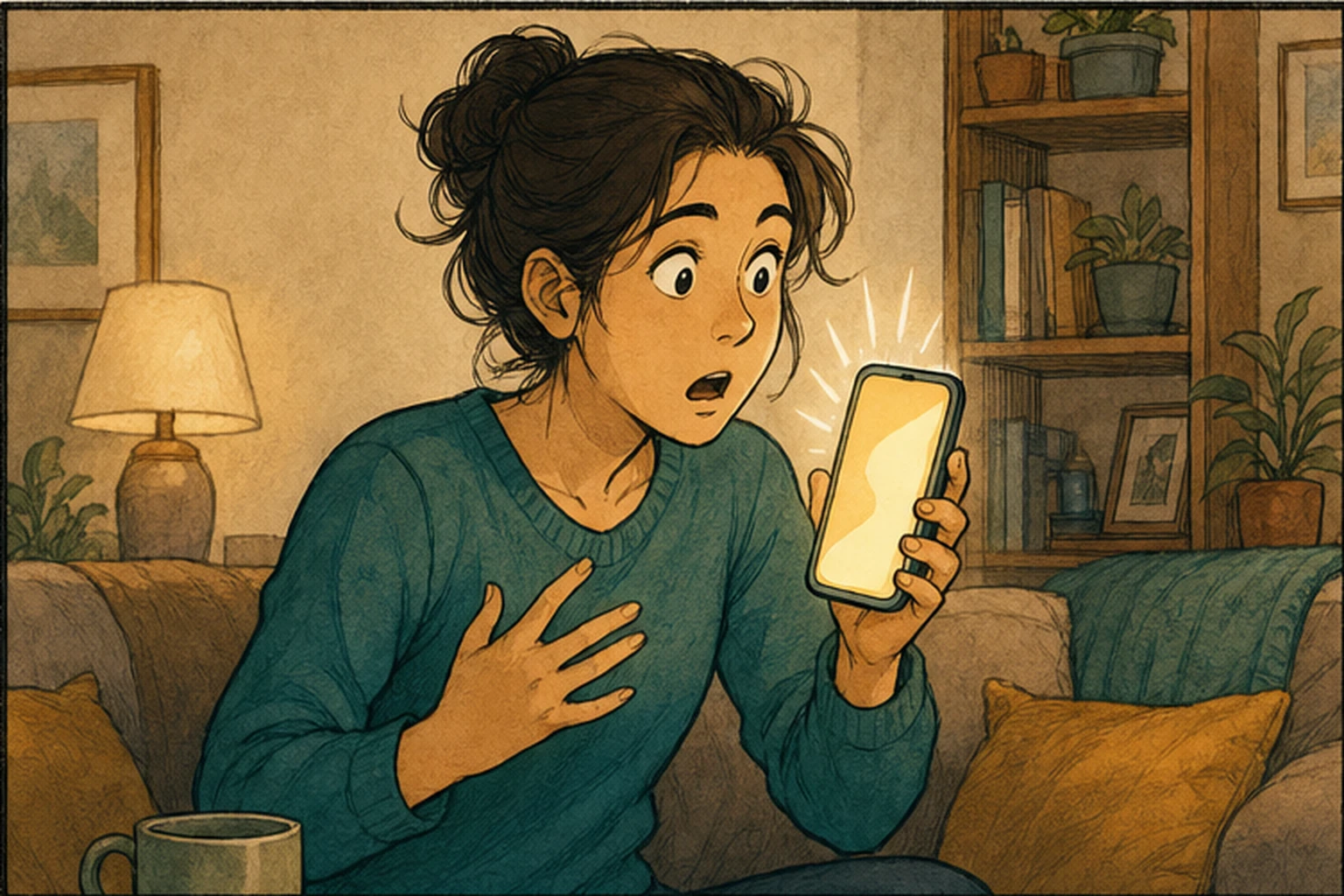


You open a short video. The title sounds urgent, the visuals look complete, and the voiceover is smooth. After watching it, you still cannot tell who it cites, what it proved, or whether it deserves trust.
That fatigue does not come only from AI. It comes from a new information cost: more content now looks like an answer, but you have to spend more time deciding whether it is a reliable answer.
On June 4, 2026, The Verge asked a blunt question: if YouTube, Instagram, TikTok, and other platforms are already pushing content verification and AI labels, why can users not filter this content out more easily? The question matters because most readers are not trying to ban all AI content. They want to spend less time on low-quality material with no sources and no accountability.
A platform label can tell you that something may have been generated or altered with AI. It cannot decide whether that item belongs in your information flow. That step still depends on how you manage your own entry points.
This lesson turns “AI Content Labels Will Not Save Your Time; Your Entry Points Matter More” into one practical reader question: AI labels give readers clues, but they do not reduce attention cost by themselves. To see less low-quality AI content, clean up the entry points where sources, summaries, and recommendations enter your workflow. Use the rest of the article to identify what should happen before the team proceeds.
A label is a clue, not a filter
YouTube says creators must disclose realistic content that has been altered or synthesized, and the platform may show labels in the description or more prominently on sensitive topics. Meta has said it will add AI-related labels to video, audio, and images when it detects industry-standard AI image indicators or when users disclose AI use. C2PA’s Content Credentials also try to make content origin, edit history, and signatures easier to verify.
These efforts matter. They help you see that a video, image, or audio clip may not have come directly from a camera or a person alone.
But seeing a clue is not the same as reducing noise. You may know that a video has an AI label and still keep seeing the same kind of video recommended. You may see provenance credentials and still need to decide whether the item is worth reading, trusting, or sharing.
TikTok has already placed AI-generated content controls inside Manage Topics so users can raise or lower how much of this content appears in For You recommendations. That shows filtering is possible. It has just not become the default workflow everywhere.
So do not confuse “this has a label” with “the platform handled it for me.” A label only brings the question to your attention: does this content deserve your attention?
The real problem is content with no accountability path
You do not have to start by asking whether a piece was made by AI. A better question is: if I trust this, could it lead me to make a worse judgment?
Some content should be avoided outright. It has no sources, uses fear or exaggerated headlines for clicks, looks like a tutorial but has no steps, no author responsibility, and no material you can check. Even if it was not generated by AI, it should not enter your daily information list.
Some content can be skipped quickly. It may carry an AI label, or it may simply repackage news without new examples, author judgment, or limits. You do not need to be angry at it. You only need not spend deep-reading time on it.
Some content is worth keeping. Even if AI helped produce it, it can still be useful when sources, methods, author judgment, and limitations are clear, and when readers can return to the original material. For work decisions, the key is not whether AI was completely absent. The key is whether the content is traceable, verifiable, and usable with responsibility.
If you publish content, readers will use the same standard on you
This does not only affect readers. It affects creators too. When you publish an article, video, or deck, readers will ask the same three questions: where are the sources, where is the human judgment, and where are the limits?
Using AI to organize a draft, outline an article, translate, or check typos does not automatically remove value. The question is whether your judgment remains visible. Which claims come from official documents, research, or interviews? Which parts are your experience and trade-offs? Which situations are not suitable for direct application? Which points may change by region, version, price, or platform policy?
If those parts are clear, AI can be an assistant. If the content only compresses someone else’s work into a summary that looks complete, then even without an AI label it is still low-quality content that is harder to recognize.
Clean up your own entry points first
Platforms may eventually give you better AI-content filters. But the useful changes you can make now are small.
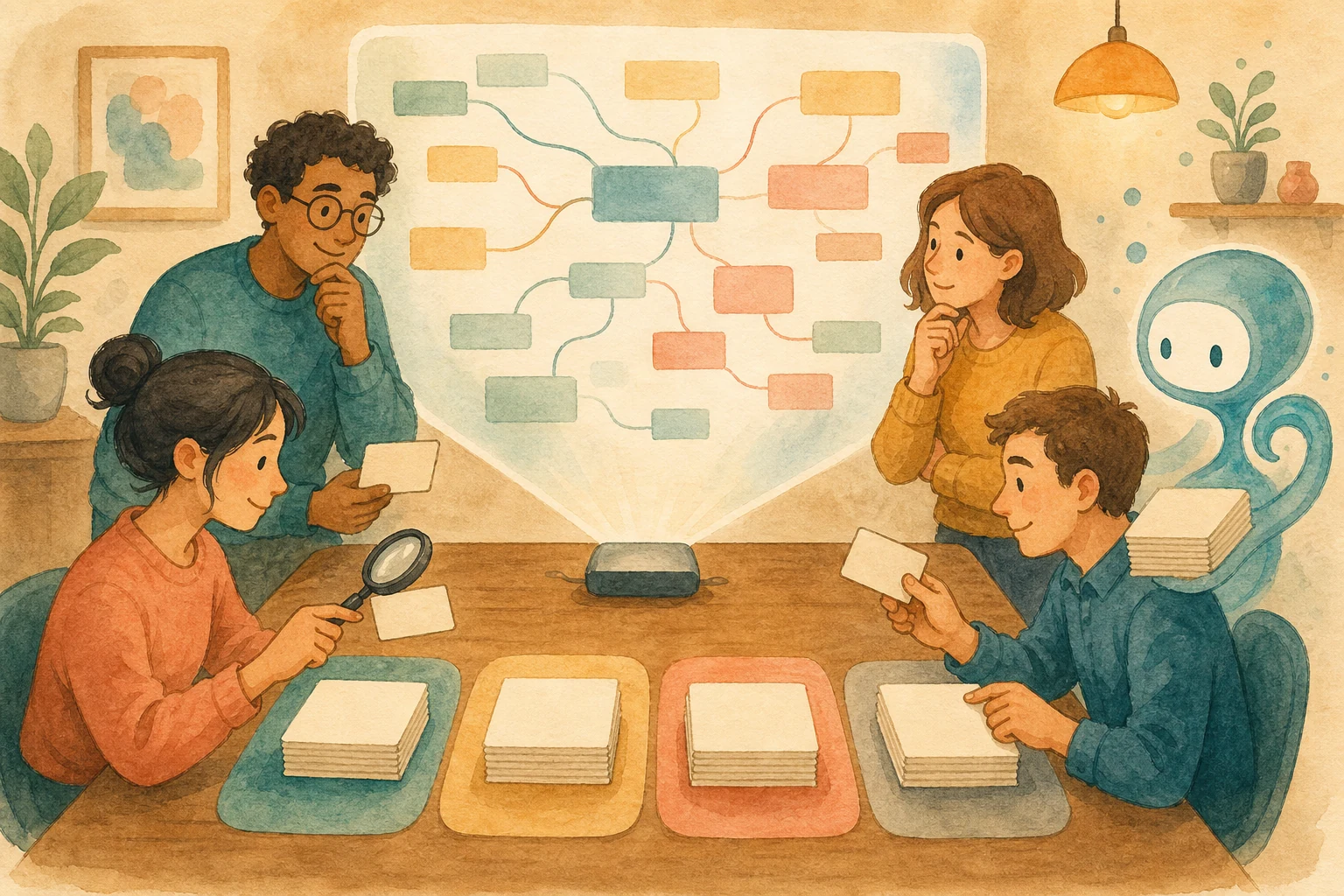
On social platforms, follow fewer accounts that only repost summaries without sources, and put trusted authors, institutions, and long-term observers into lists. On video platforms, mark repetitive, exaggerated, unsourced videos as not interested, and subscribe to channels that explain their methods and limitations. In search and reading, start important questions with official documents, research, or long-trusted media before turning to summary content. Inside a team, keep a list of sources that can be cited so important decisions do not rely only on short social posts.
This is not about becoming conservative. It is about turning information quality from a feeling into a process. If the platform has not yet given you the switch you want, you can still make low-trust content less likely to enter your workflow.
Do not throw away every AI-assisted item
A blanket rule has a cost too. Some AI-assisted content is still worth reading: the author clearly explains that AI was used only for captions, transcript cleanup, or translation; the content has complete sources, methods, and limits; the subject itself matters, such as official documentation, research summaries, or product updates; or the content is low-risk entertainment, inspiration, or early exploration that will not affect health, money, law, or work decisions.
The thing to filter strictly is not “AI was involved.” It is content with no source, no responsibility, and no verification path that still pretends it can reach conclusions for you.
The next time you see an AI label, do not stop at “Was this made by AI?” Ask instead: does it have sources, does it show human judgment, and are its limits clear? If the answers are unclear, you do not need a perfect platform off switch before keeping it outside your own information flow.
AI handoff card
Turn this trend follow-up decision into your own checklist Copy this into your own AI tool. It asks about your context first, then turns this article’s decision frame into an action checklist. BMC will not see what you paste.
I want to apply this BMC mini lesson to my own situation: AI Content Labels Will Not Save Your Time; Your Entry Points Matter More

Specific problem this article handles: AI labels give readers clues, but they do not reduce attention cost by themselves. To see less low-quality AI content, clean up the entry points where sources, summaries, and recommendations enter your workflow.
Article URL: https://boosterminiclass.com/en/posts/ai-generated-content-filter-checklist/

Do not only summarize the article. First ask me 3 questions to clarify:
1. the real workflow or decision I am dealing with;
2. which data, permissions, accounts, costs, or external actions are involved;
3. whether I need a stop/go decision, a trial checklist, a handoff template, or a risk tier.

Then check my situation with this article-specific framework: Identify where low-quality or AI-generated content enters daily platforms; judge whether a piece has sources, human judgment, and clear limitations; adjust social, video, search, and team information entry points so low-trust content is less likely to enter the workflow.

Please output:
- one sentence on whether I should proceed, run a limited trial, or pause;
- a comparison table applying the framework to my case, with ready / missing evidence / needs human review;
- one smallest step I can take today;
- where I need an owner, log, rollback path, or human review.
Before using the checklist, have a human verify evidence, owner, and rollback path.
References
- The Verge: Let us filter AI slop, you cowards — https://www.theverge.com/ai-artificial-intelligence/942909/let-us-filter-ai-slop-google-youtube-meta-instagram-tiktok
- YouTube Blog: How we’re helping creators disclose altered or synthetic content — https://blog.youtube/news-and-events/disclosing-ai-generated-content/
- Meta: Our Approach to Labeling AI-Generated Content and Manipulated Media — https://about.fb.com/news/2024/04/metas-approach-to-labeling-ai-generated-content-and-manipulated-media/
- C2PA Specifications: Content Credentials and technical specifications — https://c2pa.org/specifications/specifications/2.2/index.html
- Unite.AI: TikTok Introduces User Controls for AI-Generated Content in Feeds — https://www.unite.ai/tiktok-introduces-user-controls-for-ai-generated-content-in-feeds/