
When you ask a teammate to change code, the usual workflow starts with an issue, requirements, a branch, and then a pull request. There may be back-and-forth, but humans still decide whether the request makes sense, where the change belongs, and when it is safe to merge.
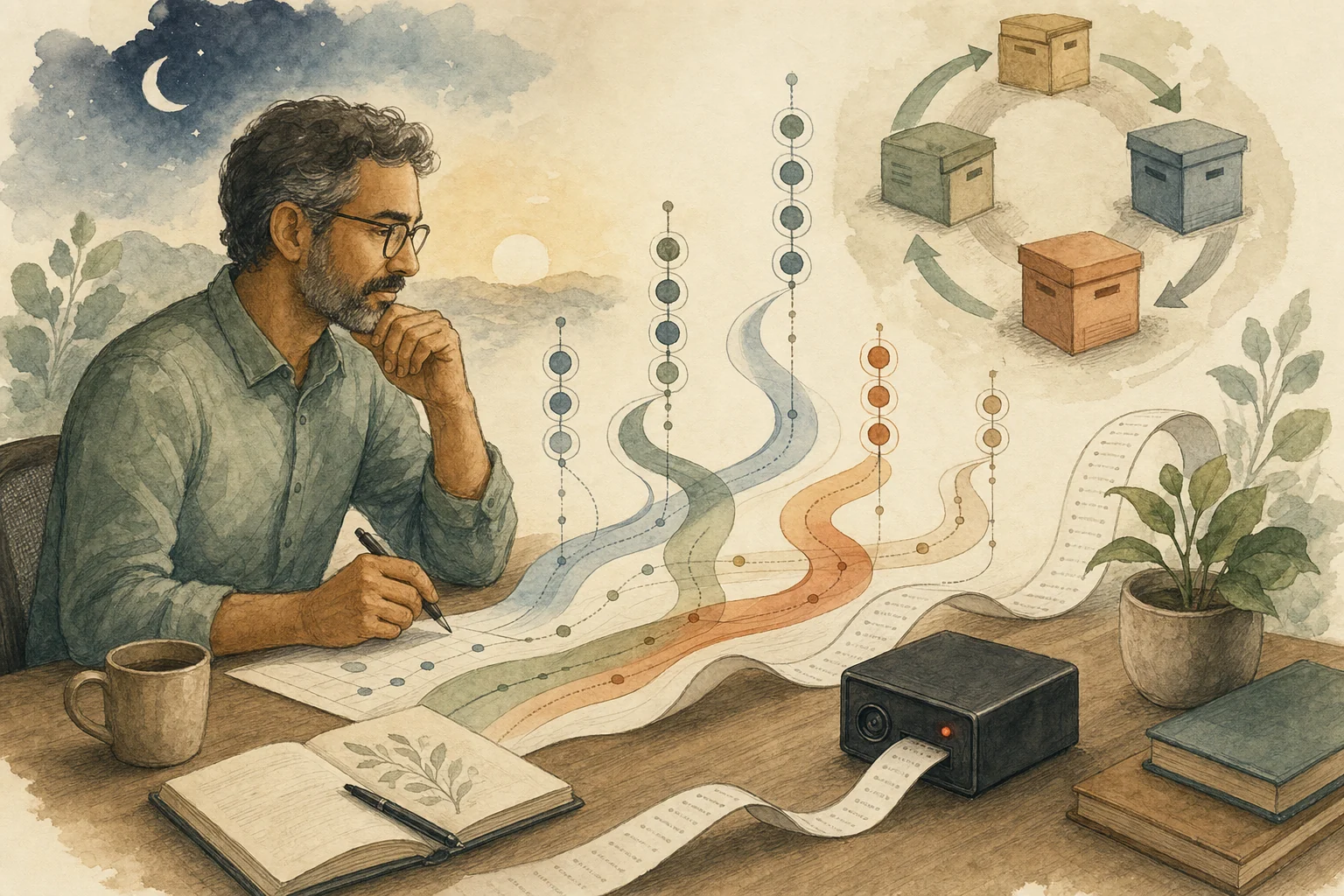
A coding agent changes that everyday scene: it does not only suggest code. It can read the issue, edit files, run tests, and even open its own pull request. AI is moving from “advice in chat” to “actual changes inside the repo.”
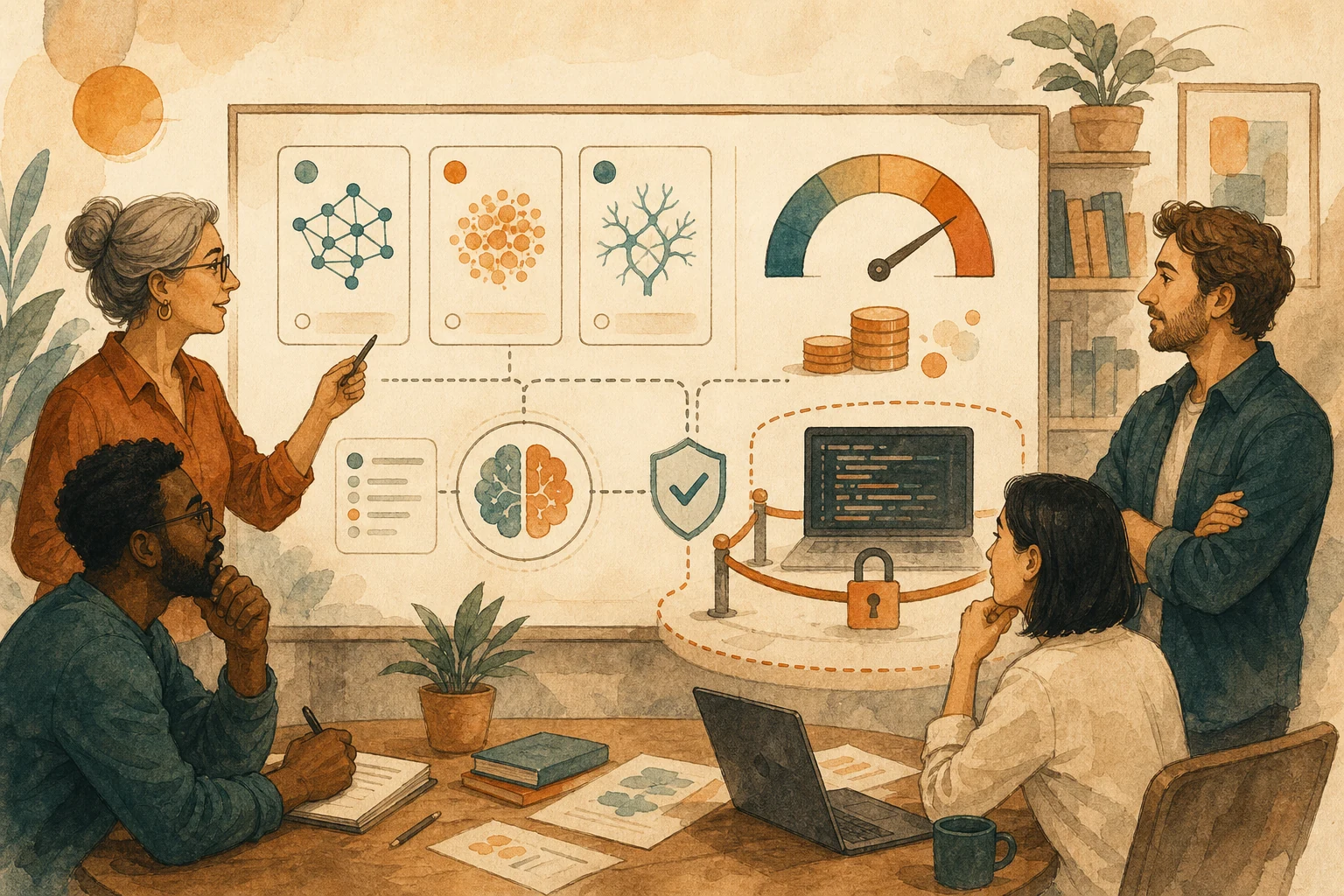
That is useful, but it cannot own product judgment. Scope, assumptions, risk, and rollback still need human boundaries. Before adopting Devin, Copilot-style coding agents, or similar tools, do not ask only whether the agent can finish the task. Ask where the work must stop so a human can confirm the direction is still right.
This lesson turns “Before Letting an AI Agent Write Code, Put Checkpoints into the Task” into one practical reader question: A coding agent can read issues, edit files, run tests, and open PRs, but the task should not be a single line that says finish it. Use checkpoints to decide how far it can go and where a human must review. Use the rest of the article to decide what should happen before the team proceeds.
Start with a checkpoint table
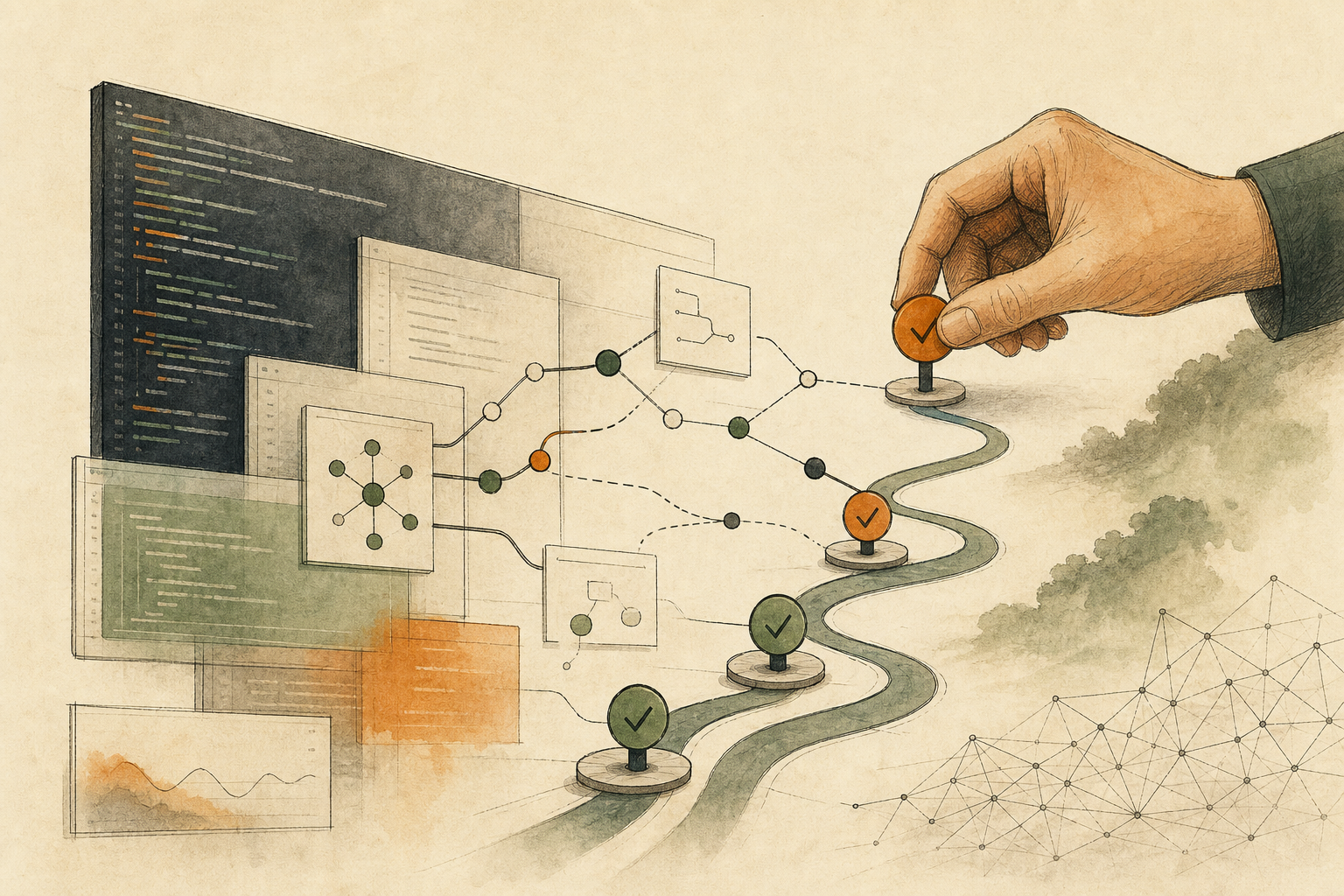
The fuzzier the task, the less it should be handed to an agent in one pass. Break it into reviewable gates first.
| Checkpoint | What the agent may do | What the human must verify | If it fails |
|---|---|---|---|
| Task summary | Restate the issue, goals, and non-goals | Did it invent the wrong product assumptions? | Rewrite the prompt or shrink the issue |
| Implementation plan | List files, functions, and tests it wants to change | Is the scope too wide or touching sensitive flows? | Send it back to re-plan |
| First small diff | Change only a test or one clear module | Is the diff readable and easy to roll back? | Stop before the scope spreads |
| Tests and evidence | Run specified tests and show results | Do the tests prove the requirement, not just turn CI green? | Add tests or rewrite acceptance criteria |
| PR review | Explain assumptions, limits, and rollback | Are data, permission, API, and user-flow assumptions valid? | Split the PR or have a human take over |
This table prevents the agent from doing more work in the wrong direction.
Direct task vs checkpoint flow
If the team lacks clear issue templates, testing habits, and review gates, a coding agent amplifies those gaps.
- Scope: direct delegation makes the agent guess files and product assumptions; checkpoints define goals, non-goals, and no-touch areas first.
- Diff and tests: direct delegation can mix tests, logic, UI, docs, and config at once; checkpoints keep each diff small and require evidence for the intended behavior.
- Rollback: direct delegation may produce a large PR before anyone sees the risk; checkpoints let the team stop, revert, or split the work at each gate.
If the task is clear, tested, and small, an agent can accelerate it. If the requirement is still debated, the core flow lacks tests, or nobody can explain the business rule, do not let the agent implement the whole feature directly.
Which tasks fit an agent
Cognition’s Devin and other coding agents make “AI opens its own PR” feel normal. The practical adoption test is still simple: can the task be checked?
Suitable: issues with done criteria, non-goals, relevant files, specified tests, bounded risk, a review owner, and a small rollback path.
Not yet: vague feature requests, untested core flows, payment, permission, deletion, login, or cross-service changes where verification and rollback are unclear.
No-switch case: if fewer than half of the suitable conditions are true, do not switch the whole feature to the agent. Use it for codebase research, planning, test drafts, or dependency mapping, then allow only a small diff after human confirmation.
A coding agent can raise output, but it does not take over product accountability. Put human checkpoints into the task before the PR becomes too large to inspect.
AI handoff card
Convert the article’s decision into your workflow If you want a personal checklist from this lesson, paste the prompt below into an AI tool you trust and avoid sharing sensitive data.
I want to apply this BMC mini lesson to my own situation: Before Letting an AI Agent Write Code, Put Checkpoints into the Task

Specific problem this article handles: A coding agent can read issues, edit files, run tests, and open PRs, but the task should not be a single line that says finish it. Use checkpoints to decide how far it can go and where a human must review.
Article URL: https://boosterminiclass.com/en/posts/coding-agents-need-human-checkpoints/

Do not only summarize the article. First ask me 3 questions to clarify:
1. the real workflow or decision I am dealing with;
2. which data, permissions, accounts, costs, or external actions are involved;
3. whether I need a stop/go decision, a trial checklist, a handoff template, or a risk tier.

Then check my situation with this article-specific framework: 1. the coding-agent task scope, non-goals, and files or systems it must not touch; 2. how far the agent may go in reading issues, editing files, running tests, and opening a PR; 3. which diffs, errors, permissions, or data changes must stop for human review; 4. a handoff checklist for instructions, tests, rollback, and review.

Please output:
- one sentence on whether I should proceed, run a limited trial, or pause;
- a comparison table applying the framework to my case, with ready / missing evidence / needs human review;
- one smallest step I can take today;
- where I need an owner, log, rollback path, or human review.
Pause for human review before account, money, personal-data, or external actions.
References
- TechCrunch: Cognition’s Scott Wu says AI coding agents shouldn’t replace humans — https://techcrunch.com/2026/05/29/cognitions-scott-wu-says-ai-coding-agents-shouldnt-replace-humans/
- Cognition: Official site — https://cognition.ai/
- Every: Transcript: Cognition’s CEO on What Comes After Code — https://every.to/podcast/transcript-d605184b-b24e-49e5-878a-372e68ff8cdb