
“Free cleaning, as long as we can record it” sounds like a simple trade: your home gets cleaned, you save the fee, and the company gets training data for home robots. But this is not an ordinary discount. The exchange may include your living-room layout, kitchen storage, bedroom doorway, children’s toys, pets, visitors, and the rhythm of how your home is used during the day.
So the decision should not start with whether free cleaning is worth it. The better question is: if the footage leaves your home, can you still control who sees it, how long it stays, what it trains, and whether it can be deleted later?
This lesson turns “If Free Cleaning Requires Home Footage, the Real Price Is Data Control” into one practical reader question: Free cleaning that records your home is not only a discount. Before agreeing, decide which rooms, people, objects, routines, uses, retention rules, and deletion rights are actually covered. Use the rest of the article to break down what should happen before the team proceeds.
A home is not a showroom
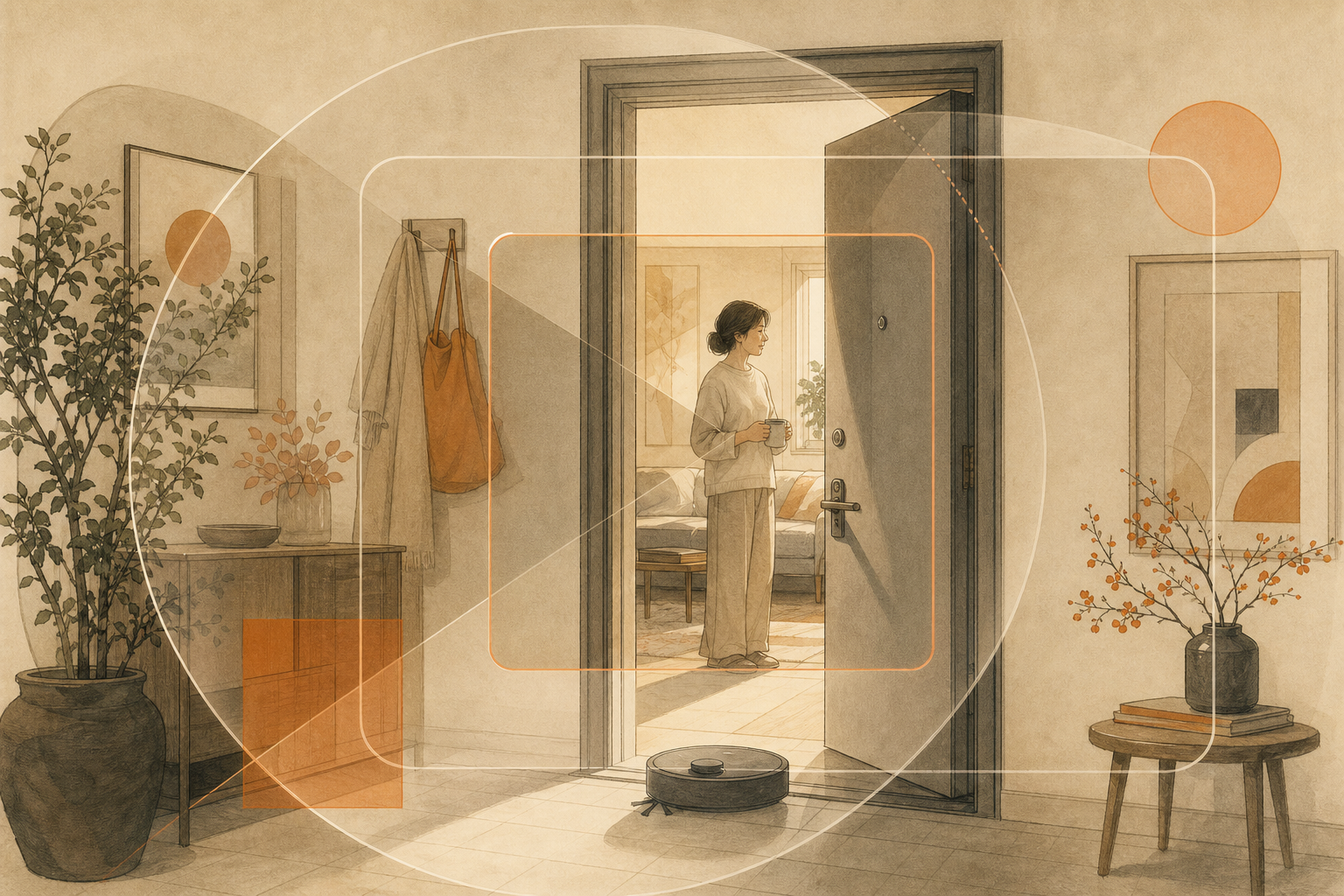
Many product telemetry streams record clicks, errors, or device status. Household footage is different. It records space, people, and habits together. One cleaning session may capture a note on the fridge, documents on a desk, a package label near the door, or the times when family members move between rooms.
That data is valuable for robot training because real homes are messier than showrooms. For the same reason, it is more sensitive for the people who live there. You are not only allowing someone to see whether the floor is dirty. You are allowing them to observe how a private space works.
If the provider only says the footage will be used to “improve the service,” that is not enough. Improvement could mean human labeling, model training, research, partner access, or a future product dataset. Each use has a different risk, and they should not be hidden under one phrase.
Define what must not be filmed first
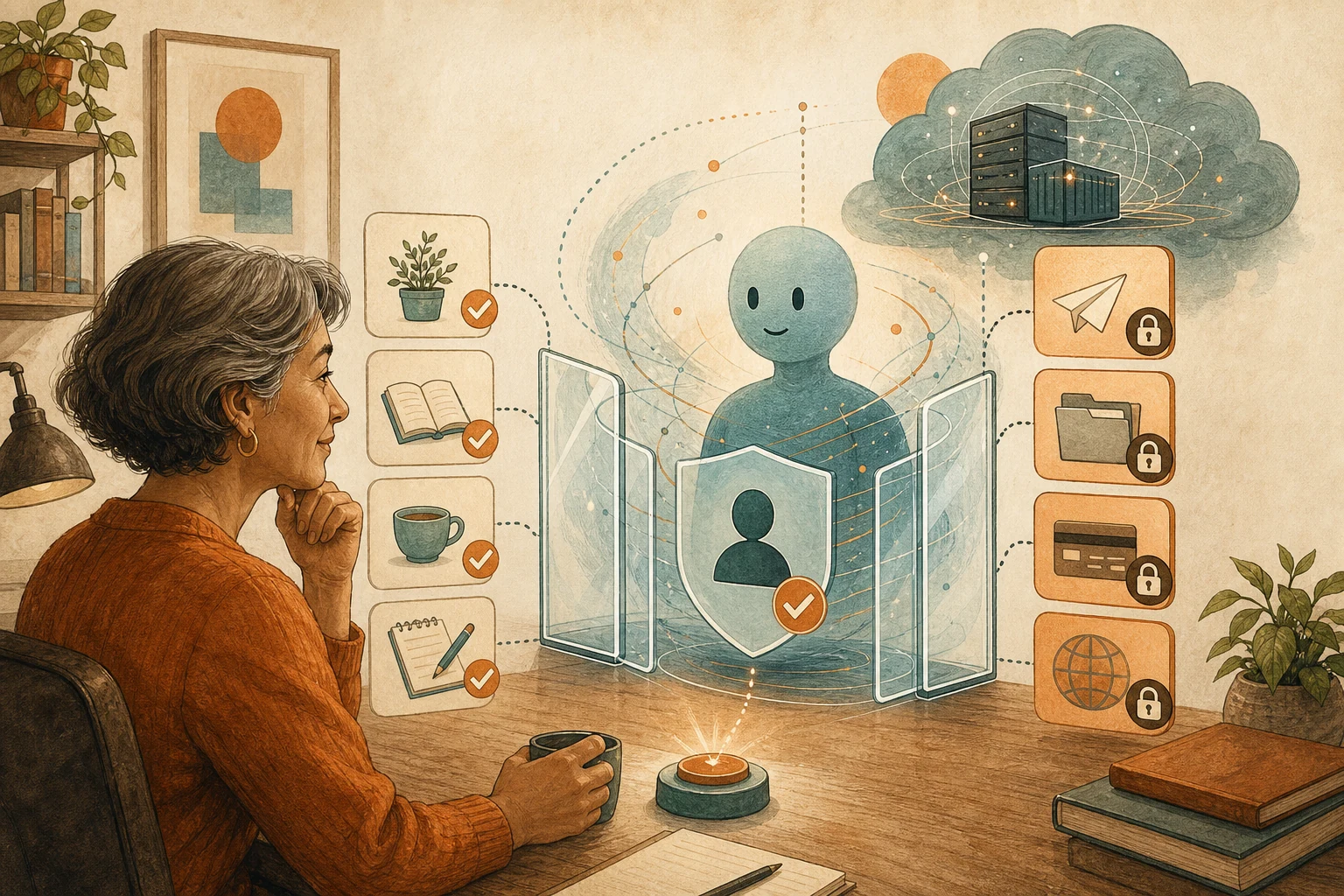
A safer approach is to shrink recording before it starts, not to grant the whole home and regret it afterward. For example, allow only the living room, not bedrooms, bathrooms, or the home office. Stop filming when family or visitors are present. Move personal documents, photo walls, children’s items, and medical supplies out of frame. Keep the recording window fixed and predictable.
You also need to know who can see raw footage. Is it only the cleaning team? Will humans label the video? Can research teams, contractors, or partners access it? Will it be stored across borders? If those answers are vague, you cannot evaluate the risk, so the home should not become a training site.
Deletion rights matter most. Many people assume that withdrawing consent means the data disappears. In practice, withdrawal may only stop future collection; raw video, labels, backups, or model use may not be reversible. Before agreeing, ask whether raw footage can be deleted, whether labels can be deleted, how long backups remain, and whether withdrawn data can still affect future models.
Free is not always cheaper than paid
If your goal is simply a cleaner home, paid cleaning or a no-recording option is often simpler. The real cost of the free option is managing the risk of household data leaving your control. That cost may not appear on an invoice, but it appears in retention, reuse, and third-party access.
The offer becomes easier to consider only when the provider clearly states filming scope, purpose, retention period, excluded areas, access list, deletion process, and withdrawal effect—and when everyone who shares the space can understand and accept it. If several of those answers are missing, default to no recording or to one low-risk area only.
Home robots need real-world data. That part is understandable. But real-world data should not be collected through vague consent. When free cleaning asks to film your home, the first thing to protect is not the floor. It is your control over household data.
AI handoff card
Turn this trend follow-up decision into your own checklist Copy this into your own AI tool. It asks about your context first, then turns this article’s decision frame into an action checklist. BMC will not see what you paste.
I want to apply this BMC mini lesson to my own situation: If Free Cleaning Requires Home Footage, the Real Price Is Data Control

Specific problem this article handles: Free cleaning that records your home is not only a discount. Before agreeing, decide which rooms, people, objects, routines, uses, retention rules, and deletion rights are actually covered.
Article URL: https://boosterminiclass.com/en/posts/home-robot-training-data-consent-checklist/

Do not only summarize the article. First ask me 3 questions to clarify:
1. the real workflow or decision I am dealing with;
2. which data, permissions, accounts, costs, or external actions are involved;
3. whether I need a stop/go decision, a trial checklist, a handoff template, or a risk tier.

Then check my situation with this article-specific framework: When evaluating a free cleaning or home-robot training-data offer, list the rooms, people, voices, objects, and routines that may be captured; then verify purpose, retention, third-party sharing, deletion and withdrawal rights, and whether family, roommates, visitors, or children also need notice and consent.

Please output:
- one sentence on whether I should proceed, run a limited trial, or pause;
- a comparison table applying the framework to my case, with ready / missing evidence / needs human review;
- one smallest step I can take today;
- where I need an owner, log, rollback path, or human review.
Before using the checklist, have a human verify evidence, owner, and rollback path.
References
- Ars Technica: Startup offers free home cleaning—if it can record it all for robot training — https://arstechnica.com/ai/2026/05/robot-training-startup-will-send-humans-wearing-cameras-to-clean-your-home/
- The Verge: Tech companies desperately want to film you doing chores — https://www.theverge.com/ai-artificial-intelligence/940007/ai-companies-will-pay-for-robot-training-data
- Shift: Free Home Cleaning in NYC — https://www.shiftapp.nyc/